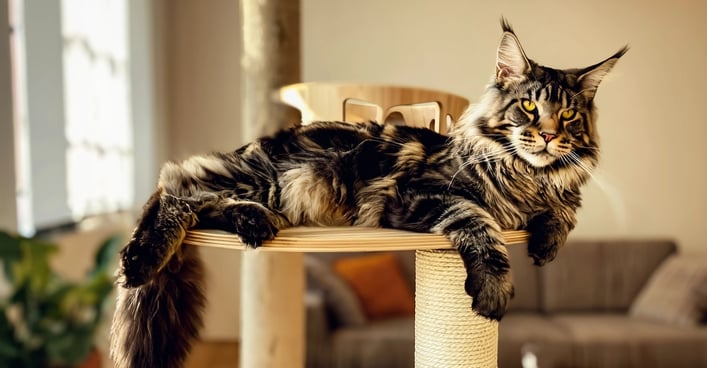
Best Cat Trees for Large Cats: Heavy-Duty Options for 2026
Discover the sturdiest cat trees for Maine Coons, Ragdolls, and other large breeds. Our 2026 guide covers top-rated picks, key features, and safety tips for your gentle giant.
Share this page
Best Cat Trees for Large Cats: Heavy-Duty Options for 2026
Large cat breeds like Maine Coons, Norwegian Forest Cats, and Ragdolls require furniture built for their substantial weight and size. Standard cat trees designed for 8-10 pound cats simply won't suffice for these gentle giants. This comprehensive 2026 guide provides everything you need to select the perfect, sturdy cat tree, including top-rated recommendations, essential features, and budget-friendly solutions.
Why Large Cats Need Special Cat Trees
Weight Considerations
Standard Cat Trees: Typically support cats weighing 8-12 lbs.
Large Breeds: Often weigh 15-25+ pounds.
Multiple Cat Households: Require even sturdier construction to handle combined weight.
Dynamic Force: Jumping and climbing create impact forces far greater than a cat's static weight.
Size Requirements
Large cats need furniture that accommodates their frame:
Larger Platforms: Big enough for a full-body stretch.
Wider Perches: Comfortable for bigger bodies to lounge.
Adequate Headroom: Taller clearances for sitting upright.
Spacious Hideaways: Condos and cubbies must fit their large frames comfortably.
Fully Customized: Build to the exact dimensions your cat needs.
Material Control: Select the highest quality, pet-safe materials.
Cost-Effective: Can be cheaper than commercial premium trees.
Personal Satisfaction: The pride of creating a unique piece for your pet.
Placement and Safety Tips for 2026
Ideal Location
Near a Window: Provides entertainment and mental stimulation.
In a Quiet Corner: Away from high-traffic areas to reduce stress.
Corner Placement: Utilizes walls for added natural stability.
Avoid: Placing near fragile decor, heaters, or in cramped hallways.
Essential Safety Considerations
Anchor Tall Trees: Use the included wall straps for any tree over 60".
Perform Regular Inspections: Monthly checks for loose screws, wobble, or fabric wear.
Test Stability Yourself: Apply pressure to various points before your cat uses it.
Non-Slip Base: Add rubber furniture pads if the base slides on your flooring.
Maintenance and Maximizing Longevity
Routine Care
Weekly Vacuuming: Remove accumulated hair, dander, and debris.
Immediate Spot Cleaning: Address accidents quickly to prevent stains and odors.
Rotate the Tree: Periodically turn it to distribute wear on scratching posts evenly.
Monthly Tightening: Check and tighten all bolts, screws, and connectors.
Signs It's Time to Replace
Persistent Wobbling: The base or structure can no longer be stabilized.
Exposed Frame: Cats may chew or ingest loose wood or particle board.
Completely Worn Sisal: Posts no longer provide an effective scratching surface.
Permanent Odors: Smells that cannot be eliminated through cleaning.
Cost Breakdown and Value by Budget
Budget Tier
Price Range
Typical Construction
Expected Lifespan
Best For
Budget
$50 - $100
Particle board, carpet
2-3 years
Single large cat, temporary solution
Mid-Range
$100 - $250
Plywood frame, sisal & carpet
3-5 years
Most single or paired large cat households
Premium
$250 - $500+
Solid wood, high-quality materials
5-10+ years
Multiple cats, seeking heirloom-quality furniture
Special Considerations
For Senior Large Cats
Lower Overall Height: Reduces the risk of falls and is easier on joints.
Integrated Ramps: Help arthritic or less agile cats access higher levels.
Extra Cushioning: Thick, orthopedic padding on perches and in condos.
Maximum Stability: A non-negotiable feature for older cats.
For Households with Multiple Large Cats
Verify Total Weight Capacity: Ensure the tree is rated for the combined weight of all cats.
Multiple Hideaways: Several condos or cubbies help prevent territorial disputes.
Generous Platform Sizing: Allows more than one cat to share a level comfortably.
Staggered Level Design: Creates multiple pathways to reduce confrontation.
Conclusion
Investing in a properly scaled, heavy-duty cat tree is a non-negotiable for the health and happiness of your large feline companion. The right tree provides essential exercise, mental enrichment, appropriate scratching outlets, and a secure territory—all tailored to their grand proportions.
While budget-friendly options exist, owners of large breeds should prioritize structural integrity and durability. A wobbly or flimsy tree is not only a waste of money but can also frighten your cat and pose a safety hazard.
For most owners in 2026, the Frisco 72-inch tree offers the best balance of features and value, while the Armarkat Solid Wood series represents a worthwhile long-term investment. For multi-cat homes or those seeking ultimate stability, modular wall systems or a custom DIY build are excellent paths to explore.
Ultimately, the best cat tree is one your cat loves to use. Introduce it positively with treats and catnip, place it in an appealing location, and maintain it well to ensure it remains a favorite retreat for years to come.
Get expert advice about cat care, behavior, nutrition, grooming, and training. Ask our AI cat care expert anything about your cat and receive professional guidance.