Best Cat Supplements Guide 2026: Omega-3, Probiotics, Joint Support & More
A comprehensive 2026 guide to essential cat supplements. Learn when and how to use omega-3s, probiotics, joint support, and more for optimal feline health.
Share this page
Best Cat Supplements Guide 2026: Omega-3, Probiotics, Joint Support & More
Supplements can be powerful allies in supporting your cat's health, addressing specific concerns, and enhancing their quality of life. While a complete and balanced diet should always be the foundation, targeted supplementation can be beneficial for certain life stages, health conditions, or dietary gaps.
This definitive guide for 2026 provides expert insights into the most effective cat supplements, helping you make informed decisions for your feline companion.
Understanding Cat Supplements
Do Cats Need Supplements?
A healthy cat consuming a high-quality, nutritionally complete commercial diet typically does not require supplements. However, supplementation may be warranted in specific scenarios:
Senior Cats (7+ years): To support age-related declines in joint health, digestion, and cognition.
Specific Health Conditions: Such as arthritis, chronic digestive issues, or recurrent urinary tract infections.
Homemade or Raw Diets: To ensure all nutritional requirements are met.
Poor Nutrient Absorption: Due to illness or genetic predisposition.
Periods of Stress or Recovery: From surgery, illness, or environmental changes.
Best Cat Supplements Guide 2026: Omega-3, Probiotics, Joint Support & More - Articles
Breeds Prone to Issues: Like Maine Coons (joints) or Persians (respiratory/digestive).
The Veterinarian's Role: Your First Step
Always consult your veterinarian before introducing any new supplement. They can:
Diagnose any underlying conditions that need primary treatment.
Recommend specific products and evidence-based dosages.
Warn of potential interactions with existing medications.
Help you avoid unnecessary or potentially harmful supplementation.
Essential Cat Supplements: Types, Benefits, and Costs
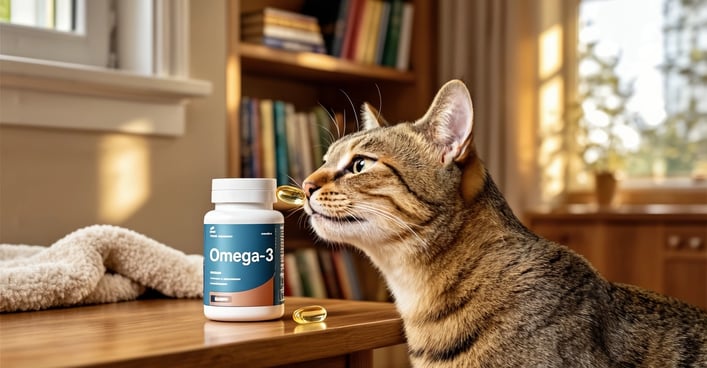
1. Omega-3 Fatty Acids (Fish Oil)
Primary Benefits:
Reduces systemic inflammation.
Promotes a lustrous coat and healthy skin.
Supports joint, heart, kidney, and cognitive function.
Quality & Selection:
Source: Look for wild-caught fish oil (salmon, sardine, anchovy), krill oil, or algae-based (for fish allergies).
Purity: Choose products that are molecularly distilled and third-party tested for contaminants like heavy metals.
Potency: Check the label for specific amounts of EPA and DHA, the active compounds.
Dosage & Cost:
General Wellness: 50-100 mg combined EPA/DHA per kg of body weight daily.
Therapeutic Use: 100-200 mg combined EPA/DHA per kg of body weight daily (under vet guidance).
Product Tier
Monthly Cost Estimate
Basic Fish Oil
$8 - $15
Premium Wild-Caught
$15 - $25
Veterinary-Grade
$25 - $40
2. Probiotics
Primary Benefits:
Supports a balanced gut microbiome and healthy digestion.
Can reduce incidents of diarrhea, especially during antibiotic treatment.
Strengthens the immune system.
Key Strains for Cats:
Enterococcus faecium
Lactobacillus acidophilus
Bifidobacterium species
Saccharomyces boulardii (a beneficial yeast)
Selection Criteria:
CFU Count: Appropriate for cats (typically 1-10 billion CFU).
Multiple Strains: A diverse formula is often more effective.
Viability: Ensure the product guarantees live cultures through its expiration date.
Product Tier
Monthly Cost Estimate
Basic Probiotics
$10 - $18
Multi-Strain Formulas
$18 - $30
Veterinary Formulations
$30 - $50
3. Joint Support Supplements
Key Ingredients & Their Roles:
Glucosamine & Chondroitin: Building blocks for cartilage repair and reduction of inflammation.
MSM (Methylsulfonylmethane): A natural sulfur compound that supports connective tissue and reduces pain.
Green-Lipped Mussel: A natural source of omega-3s and glycosaminoglycans, clinically studied for joint health.
Hyaluronic Acid: Lubricates joints and improves shock absorption.
Recommended For: Senior cats, overweight cats, breeds prone to joint issues, and cats recovering from injury.
Product Tier
Monthly Cost Estimate
Basic Glucosamine
$12 - $20
Comprehensive Joint Formulas
$20 - $35
Prescription-Strength
$35 - $60
4. Multivitamins
When to Consider:
Cats on homemade or unbalanced diets.
Extremely picky eaters with nutritional gaps.
Senior cats with reduced absorption capabilities.
During recovery from major illness.
Essential Nutrients to Look For:
Taurine: Critical for heart and eye health (cats cannot synthesize enough).
Vitamin A & E: For immune function and as antioxidants.
B Vitamins: For energy metabolism.
Product Tier
Monthly Cost Estimate
Basic Multivitamins
$8 - $15
Senior Cat Formulas
$15 - $25
Veterinary Formulations
$25 - $45
5. Urinary Health Supplements
Key Ingredients:
Cranberry Extract: May prevent bacteria from adhering to the bladder wall.
D-Mannose: A sugar that binds to certain bacteria, helping to flush them from the urinary tract.
Glucosamine: Supports the protective lining (glycosaminoglycan layer) of the bladder.
Recommended For: Cats with a history of urinary crystals, FIC (Feline Idiopathic Cystitis), or recurrent UTIs.
Product Tier
Monthly Cost Estimate
Cranberry Supplements
$10 - $18
D-Mannose Products
$15 - $25
Comprehensive Formulas
$20 - $35
Top Supplement Brands: A 2026 Review
Premium Tier ($25 - $50/month)
Nordic Naturals Omega-3 Pet: Renowned for exceptional purity and potency in pharmaceutical-grade fish oil.
Vetoquinol GlycoFlex Plus: A veterinary-developed joint supplement with clinically proven ingredients like Perna mussel.
FortiFlora by Purina Pro Plan: The most veterinarian-recommended probiotic, featuring a proven strain for feline digestive health.
Mid-Range Tier ($15 - $25/month)
Zesty Paws Salmon Oil: A popular, high-quality wild Alaskan salmon oil with convenient pump dispensing.
Cosequin for Cats: The #1 veterinarian-recommended joint health supplement brand, available in easy-to-use sprinkle capsules.
Nutramax Denamarin: The gold standard for liver support, combining SAMe and silybin in an enteric-coated tablet.
Budget Tier ($8 - $15/month)
Grizzly Salmon Oil: A reliable, pure source of Alaskan salmon oil offering good value.
Tomlyn Laxatone: A classic, effective, and affordable hairball remedy available in multiple palatable flavors.
Supplement Safety & Administration
Critical Safety Guidelines
Vet First: Never use supplements to diagnose or treat a condition without veterinary input.
Start Slowly: Introduce one supplement at a time to monitor for any adverse reactions.
Respect Dosages: More is not better and can be harmful, especially with fat-soluble vitamins (A, D, E, K).
Check for Interactions: Inform your vet of all supplements, as they can interact with medications (e.g., omega-3s may increase bleeding risk with blood thinners).
Choose Quality: Opt for brands that invest in third-party testing and transparent labeling.
How to Give Supplements to Your Cat
Liquids: Mix into wet food or use a syringe placed in the side of the mouth.
Powders: Sprinkle over a small portion of highly palatable wet food.
Capsules/Tablets: Use pill pockets, a pill gun, or crush (if safe) and mix with food.
Chews/Treats: Offer as a reward or break into pieces mixed with meals.
Pro Tip: Consistency and patience are key. If one method fails, try another form (e.g., liquid instead of powder) or a different flavor.
Creating a Smart Supplement Strategy
Budgeting for Your Cat's Health
Priority Level
Typical Monthly Cost
Examples
Essential
$20 - $40
Omega-3 for all cats, joint support for seniors.
Beneficial
$15 - $30
Probiotics for digestive health, multivitamins for specific diets.
As-Needed
$5 - $20
Hairball remedies, urinary support during flare-ups.
Cost-Saving Tips
Buy in Bulk: Larger quantities often have a lower cost per dose.
Subscribe & Save: Utilize auto-ship programs for discounts.
Prioritize: Focus on 1-2 supplements with the most significant expected benefit for your cat.
Consider Generics: Ask your vet about equivalent, more affordable veterinary formulas.
Frequently Asked Questions (FAQ)
Q: Can I give my cat human supplements?A: No. Human supplements may contain dosages or ingredients (like xylitol or certain herbs) that are toxic to cats. Always use products specifically formulated for felines.
Q: How long until I see results?A: It varies. Digestive improvements may be seen in 1-2 weeks, while skin/coat or joint benefits often take 4-8 weeks of consistent use. Some effects build over 2-3 months.
Q: Do "natural" or "organic" labels mean a supplement is safer?A: Not necessarily. These are marketing terms. Safety and efficacy depend on formulation, quality control, and appropriate dosing. Look for brands with scientific backing and transparency.
Q: Can supplements replace prescription medication or veterinary care?A: Absolutely not. Supplements are supportive care. They do not treat, cure, or diagnose diseases. Always follow your veterinarian's treatment plan for medical conditions.
Conclusion
Navigating the world of cat supplements requires a blend of knowledge, caution, and partnership with your veterinarian. By focusing on high-quality, evidence-based products that address your cat's specific needs, you can safely enhance their diet and well-being.
Remember: Supplements are meant to supplement—not replace—a nutritious diet, regular veterinary care, and a loving, enriching environment. Start with a clear goal, choose wisely, and monitor your cat's response to ensure they thrive.
Disclaimer: This article is for informational purposes only and does not constitute veterinary medical advice. Always consult with a qualified veterinarian before making any changes to your cat's diet or healthcare regimen.
Get expert advice about cat care, behavior, nutrition, grooming, and training. Ask our AI cat care expert anything about your cat and receive professional guidance.