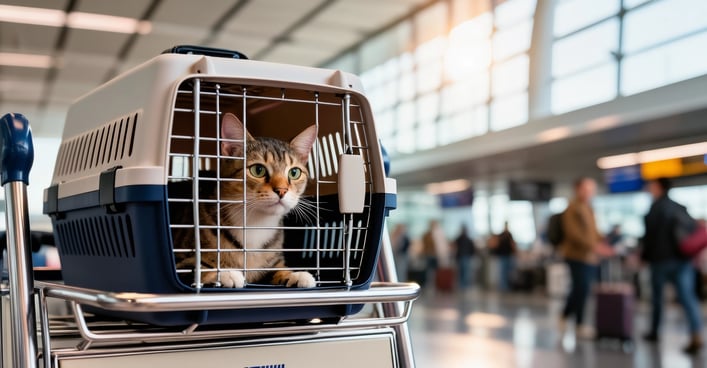
Best Cat Carriers for Air Travel: Your Complete Guide for 2026
Navigate airline regulations with confidence. Our 2026 guide reviews top-rated carriers, compares costs, and provides essential tips for a safe, stress-free journey with your cat.
Share this page
Best Cat Carriers for Air Travel: Your Complete Guide for 2026
Air travel with your feline companion demands meticulous preparation and the perfect carrier. Unlike car trips, flying imposes strict regulations on carrier dimensions, construction, and features. Selecting an airline-approved carrier that ensures your cat's safety, comfort, and compliance is the cornerstone of a smooth journey for both of you.
This definitive guide reviews the best cat carriers engineered for air travel in 2026. We cover in-cabin and cargo options, decode airline requirements, and share expert travel tips to prepare you for takeoff.
Understanding Air Travel with Cats
In-Cabin vs. Cargo Travel
In-Cabin Travel (Highly Recommended)
Your cat travels with you in a carrier stowed under the seat.
Limited to smaller cats and specific carrier dimensions.
Involves higher fees but is significantly safer and less stressful.
Permitted by most major airlines (always verify specific policies).
Total Estimated Trip Cost:$200 - $600+, depending on airline, distance, and carrier choice.
Airline-Specific Policies (2026 Overview)
Airline
In-Cabin Fee (One-Way)
Max Carrier Dimensions (LxWxH)
Key Notes
American Airlines
~$125
~18" x 11" x 11"
Soft-sided only. Book pet space early.
Delta Air Lines
$95 - $200
Varies by aircraft/seat.
Fee depends on destination.
United Airlines
~$125
17.5" x 12" x 7.5" (hard) 18" x 11" x 11" (soft)
Specific hard/soft rules.
Southwest Airlines
$95
Must fit under seat.
No cargo option. First-come, first-served.
International Travel: Requirements vary drastically by country and may include import permits, extended quarantines, and specific blood tests. Start research months in advance.
Essential Safety Tips
What to Always Avoid
Sedating your cat without direct veterinary instruction.
Checking brachycephalic (flat-faced) breeds like Persians in cargo.
Traveling during extreme temperature periods.
Opening the carrier in unsecured areas like airport terminals.
What to Always Do
Book your pet's spot on the flight as soon as you book your ticket.
Carry physical copies of health documents in your carry-on.
Ensure your cat wears a secure collar with an ID tag (in addition to their microchip).
Pack a small travel kit with food, a spoon, and a portable water bowl in your carry-on.
Conclusion: Choosing the Right Carrier for 2026
Successful air travel with your cat hinges on preparation, the right equipment, and a clear understanding of airline regulations. For the frequent flyer, the Sleepypod Air offers unparalleled safety and design. For most travelers, the Sherpa Original Deluxe provides reliable, airline-guaranteed performance at a great value.
Remember, the carrier is just one part of the equation. Begin acclimating your cat weeks before your trip, ensure all veterinary paperwork is flawless, and opt for direct flights whenever possible to minimize overall stress.
With the right carrier and thorough preparation, flying with your feline friend can be a manageable experience, allowing you to explore the world together.
Get expert advice about cat care, behavior, nutrition, grooming, and training. Ask our AI cat care expert anything about your cat and receive professional guidance.