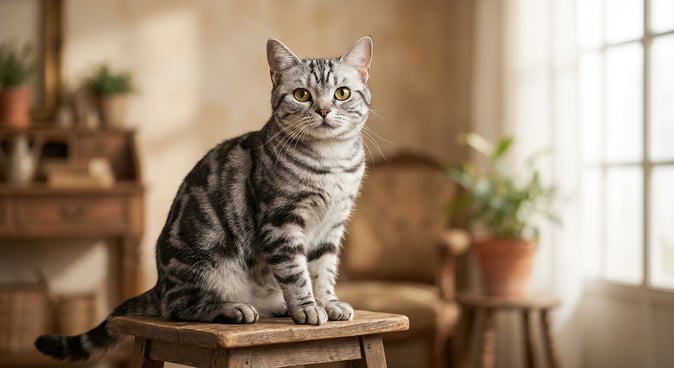
Discover how plucky European mousers evolved into the American Shorthair—America’s hardy, even-tempered family cat that has been guarding food stores and warming laps since the Mayflower dropped anchor.
Few breeds embody the classic household cat as effortlessly as the American Shorthair. Bred from tough European mousers that sailed with early colonists, this all-American favorite combines working-cat resilience with teddy-bear patience. Today they grace living rooms rather than ship holds, yet retain the sturdy build, keen intelligence, and easy-going temperament that made them indispensable on pioneer farms.
The American Shorthair’s story begins on Atlantic crossings in the 1600s when European settlers loaded their ships with short-haired cats to guard food stores from rodents. Upon landing, these cats stepped onto New World soil as working partners, multiplying in barns and streets while natural selection shaped a hardy, weather-tolerant phenotype. By the early 1900s fanciers noticed their consistent look and stable temperament, forming the first breed standard under the name “Domestic Shorthair.” In 1966 the moniker changed to American Shorthair to distinguish the pedigreed bloodline from random-bred cats and to honor the nation where it evolved.
American Shorthairs are medium-to-large cats, with males weighing 5–7 kg (11–15 lb) and females 3.5–5.5 kg (8–12 lb). Their muscular, semi-cobby bodies measure 30–46 cm from shoulder to base of tail, giving an impression of power without bulk. The broad chest, strong jaws, and thick legs hint at their mousing ancestry, while the short, dense coat—described as “hard” in cat fancy terms—acts like resilient armor against weather and scratches. Although the silver classic tabby pattern remains the most iconic, the breed accepts over 80 colors and patterns, including brown tabby, solid white, deep black, and bluish gray. Eye color harmonizes with coat: gold and copper dominate tabby varieties, while whites may flash odd-eyes (one blue, one amber).
From ship rat-catcher to sofa sentinel, the American Shorthair has evolved into the quintessential easy-care family cat. Their blend of robust health, classic good looks, and mellow temperament means they slide seamlessly into almost any lifestyle—offering twenty years of quiet companionship, playful antics, and photo-worthy tabby stripes that never go out of style.
Calm without being lazy, playful without being hyper—American Shorthairs strike a balance that fits most households. They score 4/5 for affection and friendliness, preferring to shadow you rather than ride on your shoulder, and greet guests with polite curiosity instead of hiding. Their 5/5 kid-friendly rating is well-earned; these cats tolerate dress-up games and gentle toddler hugs, rarely extending a claw. Around dogs or other cats they display 4/5 pet-friendly confidence, usually establishing household hierarchy through stoic stares rather than swats. Vocalization sits at a low 2/5, so conversations are soft chirps and trills rather than midnight serenades. Expect bursts of athletic play—fishing-pole toys send them into textbook pounces—followed by long naps in the nearest sun-puddle.
Grooming is refreshingly simple: a five-minute weekly brushing removes dead hair and keeps the coat gleaming. During spring and fall shedding seasons—rated 3/5—step up to twice-weekly sessions. Trim nails every two weeks, check ears monthly, and provide a scratching post; their moderate 3/5 exercise needs are satisfied by interactive toys, puzzle feeders, and vertical climbing space. Because they love food, measure meals rather than free-feed to prevent pudgy waistlines. A high-protein diet supports muscular mass, while dental treats reduce tartar on their strong jaws.
American Shorthairs are among the healthiest purebreds, routinely living 15–20 years. Reputable breeders screen for two known issues: hypertrophic cardiomyopathy (HCM), a heart-wall thickening, and hip dysplasia that can cause rear-limb stiffness. Ask for cardiac ultrasound and hip-rating documentation before purchase. Keep vaccinations current, provide routine bloodwork after age seven, and watch weight—their easy-going nature can slide into couch-potato habits. Otherwise, expect few vet visits beyond annual wellness checks.
Choose an American Shorthair if you want a low-drama companion that adores children, respects elders, and politely coexists with dogs. They fit apartments as readily as farmhouses, provided you offer daily play and mental stimulation. Singles will appreciate their quiet devotion, while families benefit from their patient “nanny cat” reputation. Pass them by only if you demand a lap magnet 24/7 or prefer highly vocal, extroverted breeds. In every other scenario, this adaptable all-rounder rewards owners with decades of steadfast, uncomplicated affection.
Get AI-powered advice about your cat's health and care. Enter your cat's information and start a conversation with our veterinary assistant.
Start Chat with AIGet expert advice about cat care, behavior, nutrition, grooming, and training. Ask our AI cat care expert anything about your cat and receive professional guidance.
Start Chat with Expert