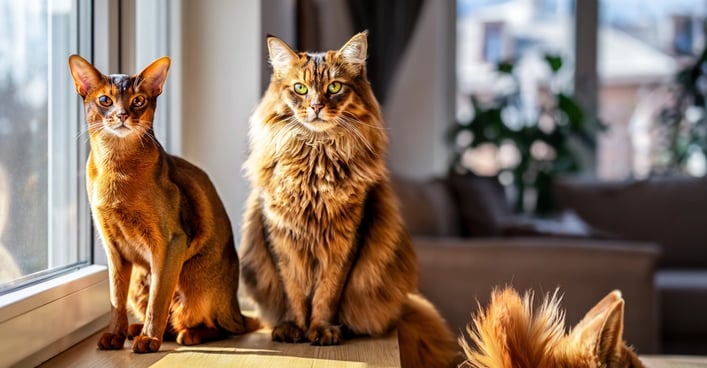
Discover the key differences between the sleek Abyssinian and the fluffy Somali cat. This guide helps you choose the perfect ticked-tabby companion for your lifestyle.
By Dr. Patricia Williams, Veterinary Behaviorist | Updated: 2026 | Reading Time: 13 minutes
The Abyssinian and Somali cats are two sides of the same captivating coin—one short-haired, the other long-haired. Both breeds share a signature ticked coat, an athletic physique, and remarkably intelligent, energetic personalities. While their genetic roots and core temperaments are nearly identical, their coat length dictates different grooming needs and creates distinct visual appeals.
This detailed comparison breaks down every aspect to help you decide which of these elegant, lively felines is the right match for your home.
Ancient Mystique:
Historical Evidence: Despite being named for Abyssinia (modern-day Ethiopia), genetic research suggests the Abyssinian's true origins lie in Southeast Asia or along the Indian Ocean coast. Artistic representations from ancient Egypt show similar cats, though these likely depict a naturally occurring type rather than the direct ancestor.
Development: The modern Abyssinian breed was refined in Great Britain during the late 1800s, using cats imported by soldiers and traders. Formal breed standards were established in the early 20th century.
Accidental Creation:
Development Story: The Somali breed began when long-haired kittens unexpectedly appeared in Abyssinian litters. Initially dismissed as breeding flaws, dedicated breeders in North America and Australia recognized their unique beauty and selectively developed them into a distinct breed. The name "Somali" was chosen as a nod to Somalia, Ethiopia's neighbor.
| Feature | Abyssinian | Somali | Key Difference |
|---|---|---|---|
| Male Weight | 8–12 lbs | 8–12 lbs | None |
| Female Weight | 6–8 lbs | 6–10 lbs | Somali females can be slightly larger |
| Body Type | Lithe, athletic | Lithe, athletic | Identical |
| Bone Structure | Fine to medium | Fine to medium | Identical |
| Overall Build | Muscular, graceful | Muscular, graceful | Identical |
Abyssinian Coat:
Somali Coat:
The Ticked Tabby Pattern: Both breeds showcase the stunning agouti (ticked) pattern, where individual hairs have multiple color bands. This creates a warm, shimmering, almost iridescent effect, reminiscent of wild cats like cougars.
Shared by Both Breeds:
Unique to the Somali:
| Trait | Abyssinian | Somali | Difference |
|---|---|---|---|
| Activity Level | Exceptionally high | Exceptionally high | Equal |
| Intelligence | Extremely high | Extremely high | Equal |
| Independence | Moderate | Moderate | Equal |
| Affection | Highly affectionate | Highly affectionate | Equal |
| Curiosity | Insatiable | Insatiable | Equal |
| Playfulness | Lifelong | Lifelong | Equal |
Constant "Busyness":
Fascination with Water:
Social Needs:
While their core personalities align, some owners observe minor nuances:
Somali:
Abyssinian:
Both breeds are predisposed to:
| Test | Abyssinian | Somali |
|---|---|---|
| PK Deficiency DNA Test | Essential | Essential |
| PRA DNA Test | Essential | Essential |
| Patella Evaluation | Recommended | Recommended |
| Renal Function Monitoring | Essential | Recommended |
| Annual Eye Exam | Recommended | Recommended |
The Somali may have a slightly longer average lifespan, potentially due to the broader genetic foundation established during its development as a separate breed.
| Aspect | Abyssinian | Somali |
|---|---|---|
| Brushing Frequency | Weekly | 2–3 times per week |
| Bathing | Rarely needed | Rarely needed |
| Mat Prevention | Easy | Requires moderate attention |
| Shedding | Moderate | Moderate to heavy (seasonal) |
| Professional Grooming | Rarely | Occasionally beneficial |
Recommended Grooming Tools:
Critical Needs for Both Breeds:
Essential Environmental Enrichment:
| Source | Abyssinian | Somali |
|---|---|---|
| Shelter/Rescue | Very rare | Extremely rare |
| Pet Quality | $600–$1,200 | $700–$1,500 |
| Show Quality | $1,200–$2,500 | $1,500–$3,000 |
Note: Somalis typically command a slightly higher price due to their relative rarity.
| Expense | Abyssinian | Somali |
|---|---|---|
| High-Quality Food | $400–$600 | $400–$600 |
| Routine Veterinary Care | $400–$700 | $400–$700 |
| Toys & Enrichment | $200–$400 | $200–$400 |
| Grooming Supplies/Prof. Care | $0–$100 | $100–$200 |
| Total Annual Estimate | $1,000–$1,800 | $1,100–$1,900 |
They Thrive In:
They May Struggle In:
Shared Critical Needs:
Choosing Between Them:
Choose an Abyssinian if you:
Choose a Somali if you:
The Abyssinian and Somali are fundamentally the same brilliant, energetic cat wrapped in two different coats. Your choice ultimately hinges on grooming preference and visual appeal: the sleek, wild elegance of the Abyssinian or the flowing, fox-tailed grandeur of the Somali.
Both breeds demand significant time, interaction, and environmental enrichment. They are not low-maintenance pets but will reward dedicated owners with unparalleled companionship, intelligence, and entertainment for 12–16 years. The Somali's extra grooming is minimal compared to many other long-haired breeds, making both excellent choices for active individuals or families seeking a truly engaging feline partner.
Further Reading:
Get AI-powered advice about your cat's health and care. Enter your cat's information and start a conversation with our veterinary assistant.
Start Chat with AIGet expert advice about cat care, behavior, nutrition, grooming, and training. Ask our AI cat care expert anything about your cat and receive professional guidance.
Start Chat with Expert