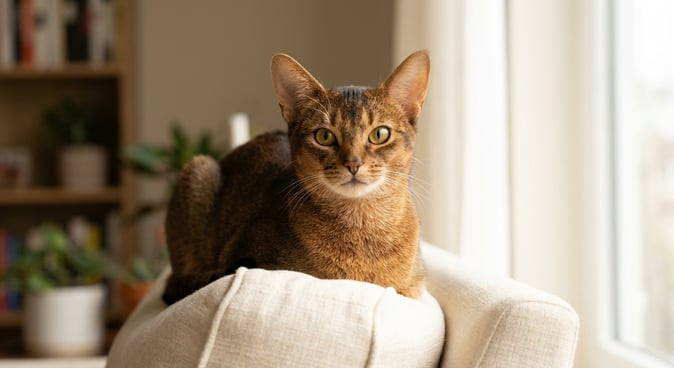
Step into the world of Abyssinian cats—living relics of ancient Pharaohs whose radiant, rabbit-soft coats and boundless kitten energy continue to mesmerize. Discover how a 19th-century war souvenir named Zula sparked a legacy that still leaps, climbs and charms its way through homes today.
With the soul of an explorer and the grace of a miniature cougar, the Abyssinian cat has captivated humans for centuries. Often called "Aby-grabbys" for their habit of snatching anything that sparks curiosity, these lithe athletes transform ordinary homes into jungles of non-stop discovery. Whether leaping to the top of a bookshelf or learning to open doors, the Aby never loses the wide-eyed wonder of a kitten.
Legend whispers that the Abyssinian first appeared in the courts of ancient Pharaohs, and modern DNA studies hint at roots along the Indian Ocean coast. The breed’s name pays homage to Abyssinia—today’s Ethiopia—where the first documented "Abys" were imported to Britain in the 1860s after the Abyssinian War. One of the earliest show cats, Zula, was exhibited at London’s Crystal Palace in 1871, dazzling crowds with her warm, ticked coat that resembled a wild rabbit’s. Despite wartime near-extinction in Europe, dedicated breeders rebuilt the gene pool, and the Aby has since pranced into hearts worldwide as one of the top five most popular shorthairs.
Weighing 3.5–5.5 kg (8–12 lb) and stretching 30–40 cm (12–16 in) in body length, the Aby is the epitome of refined athleticism. Each hair is banded with multiple colors—an effect called "ticking"—giving the coat a shimmering, iridescent quality. Accepted shades are ruddy (burnt sienna), red (sorrel), blue (soft slate), and fawn (warm beige). Large, alert ears sit atop a wedge-shaped head, while almond eyes glow in gold, green, or hazel, perpetually scanning for the next adventure. The tail is long and tapered, the legs slim but muscular, and the gait so light it resembles tip-toe dancing.
Living with an Abyssinian is like hosting a perpetual sunset safari in your living room—every moment shimmers with color, motion, and intelligence. Their low-maintenance coat belies the high-octane personality within, rewarding owners with affectionate head bumps after each gravity-defying leap. For those ready to trade sedate evenings for interactive entertainment, the ancient, ticked-coated Abyssinian offers a dozen or more years of loyal, kitten-hearted wonder.
If couch-potato cats annoy you, the Abyssinian is the perfect antidote. Energy level and playfulness both max out at 5/5, making this breed the feline equivalent of a border collie. Expect elaborate climbing routes, toy-fetching sessions, and chirping conversations as you move through the house. Intelligence (5/5) means locked cupboards become puzzles, and clicker training takes only minutes. Yet for all their zest, Abys score 4/5 in affection, happily curling on a lap—only to spring off seconds later when a new idea strikes. They adore children, other cats, and even respectful dogs, earning 4/5 across every friendliness metric. Moderate vocalization (3/5) provides commentary without the Siamese opera.
Grooming is refreshingly simple: a weekly rubber-brush sweep removes dead hair and polishes the coat to a satin gleam. With shedding rated only 2/5, seasonal "ticked tornadoes" are minimal. What you will shed is energy keeping them entertained. Provide 5/5 exercise through tall cat trees, window perches, puzzle feeders, and daily interactive play. Leash-training for supervised backyard safaris satisfies explorer instincts while keeping neighborhood birds safe. Because boredom breeds mischief, rotate toys weekly and consider adopting a second active cat for marathon chase games.
Abyssinians are generally robust, but breeders screen for three key issues. Pyruvate kinase deficiency (PKD) causes anemia; a DNA test identifies carriers so responsible programs avoid risky pairings. Renal amyloidosis, a hereditary protein deposit in kidneys, can appear in young adults—annual bloodwork and urinalysis catch early changes. Finally, the breed is notorious for dental disease and gingivitis; introduce tooth-brushing as kittens and schedule yearly veterinary cleanings. With preventive care, expect 12–15 years of companionship, though many ticked sprites prance proudly into their late teens.
Choose an Abyssinian if you want a full-time feline friend who participates in every household activity. They thrive in busy homes with older kids, home-office warriors, or retirees willing to wield a feather wand for marathon sessions. Studio apartments feel cramped unless outfitted with vertical space; screened balconies or secured gardens are bonuses. First-time owners can succeed provided they research enrichment ideas and commit to daily play. If you travel frequently, plan on puzzle feeders, webcams, or a second playful pet—solitude turns these social sprites toward destructive DIY projects.
Get AI-powered advice about your cat's health and care. Enter your cat's information and start a conversation with our veterinary assistant.
Start Chat with AIGet expert advice about cat care, behavior, nutrition, grooming, and training. Ask our AI cat care expert anything about your cat and receive professional guidance.
Start Chat with Expert